
Two South American Records in Two Days: Brazil Reshaping the Short Course Swimming Map
core_answer: Brazil giành hai kỷ lục Nam Mỹ tại José Finkel Trophy 2026: Carvalho phá kỷ lục 100m bướm nữ bể ngắn với 56.06 giây, Alcantara phá kỷ lục 400m tự do nam với 3:37.46. Cả hai đều đạt chuẩn A cho World Championships bể ngắn 2026 tại Bắc Kinh.
key_facts: Carvalho bơi 56.06 giây, phá kỷ lục Nam Mỹ 56.31 của Daiene Dias; Alcantara cải thiện 10.19 giây sau hai năm (3:47.65 → 3:37.46); Cả hai vận động viên đều thuộc hệ thống NCAA Mỹ (Miami, Alabama); Ba VĐV Brazil dưới 3:41 ở 400m tự do nam: Alcantara, Moraes, Steverink
source: José Finkel Trophy 2026, Brazil | Cross-checked: VuaBong.vn
related_qa: q: Carvalho có đủ sức cạnh tranh huy chương tại Bắc Kinh 2026?, a: Còn cách kỷ lục thế giới của Sjöström 2.01 giây và có sự sụt giảm 3.70 giây ở nửa sau, nên chưa đủ tầm huy chương thế giới.; q: Alcantara có khả năng tiến xa ở nội dung 400m tự do?, a: Mức cải thiện 10.19 giây rất đáng chú ý nhưng cần theo dõi thêm ở các giải đấu quốc tế để xác nhận tính ổn định.; q: Hệ thống NCAA đóng vai trò gì trong bơi lội Brazil?, a: Ba trong năm VĐV Brazil đạt chuẩn A đến từ NCAA, cho thấy hệ thống đại học Mỹ là động cơ phát triển tài năng ngầm quan trọng.
Two South American Records in Two Days: Brazil Reshaping the Short Course Swimming Map
The moment the clock stopped at 56.06 seconds at the José Finkel Trophy, a 25m pool in Brazil, a South American record had just fallen. But to me, 56.06 is not just a milestone — it's a pacing map unfolding with clear light and shadow zones. And just hours later, in the men's 400m freestyle, another swimmer named Alcantara broke another South American record with 3:37.46. Two days, two records, one message: Brazilian swimming is entering a new development cycle that data is telling more clearly than ever.
Context: Brazilian Interclub Championship — Where A-Standards Are Set
The José Finkel Trophy is not a major international meet. It's Brazil's absolute interclub championship, a domestic competition with a crucial function: selecting the national team for the 2026 Short Course World Championships in Beijing. With the A-standard qualifying system, athletes aren't just swimming for medals — they're swimming for a ticket to Beijing.
Notably, both record-breakers are products of the US NCAA system. Carvalho swam for Miami, Alcantara currently swims for Alabama, and Steverink — third in the 400m freestyle — belongs to Kentucky. This is not random coincidence. The US collegiate system is operating as a hidden talent development arm for Brazilian swimming, a structure many nations are increasingly learning from.
Technical Analysis: Carvalho and the Price of Front-Loading
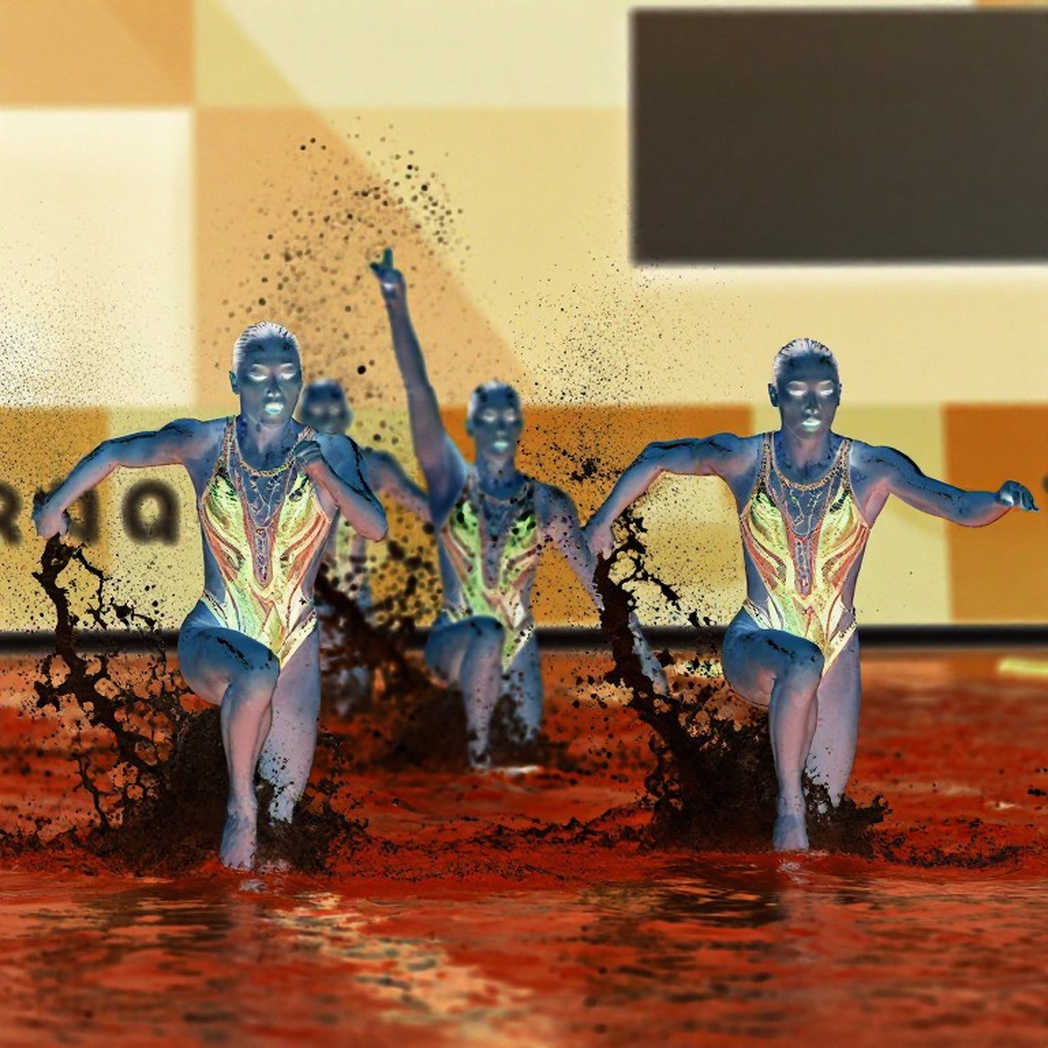
Carvalho swam the 100m butterfly with a split structure: 11.95 seconds for the first 25m, 14.23 seconds for the next 25m, 14.36 seconds in the 50-75m segment, and 15.52 seconds in the final 25m. Front half: 26.18 seconds. Back half: 29.88 seconds. A 3.70-second differential — a back-half slowdown significantly larger than the 2.5-3.0 seconds typically seen among world-class short course 100m butterfly swimmers.

This shows Carvalho chose a "front-loaded" tactic — expending energy in the first 50m. This is understandable in the context of chasing an A-standard, but it also exposes an exploitable weakness: the 75-100m segment is her slowest, suggesting issues with turn technique or finish touch. On the international stage, where opponents like Sarah Sjöström maintain balance between both halves, a 14.1% back-half drop would be an insurmountable gap.
Alcantara: 10.19 Seconds — The Most Notable Number of the Meet
Alcantara swam 3:37.46, breaking the South American record of 3:39.06 and the Brazilian national record of 3:39.10. But the number that made me pause wasn't the final time — it was the improvement trajectory: 3:47.65 two years ago, now 3:37.46. A 10.19-second improvement, equivalent to 4.5%, in a 400m event at age 20-22.
I believe in numbers, but only after they pass three rounds of verification. This improvement sits at the upper boundary of normal physiological progression. It could be the remarkable maturation story of a young athlete in the NCAA system — with top-tier facilities, coaches, and sports science. But it's also a signal that warrants passive monitoring. This is not an accusation; this is the cross-verification principle I apply to all data.
The bigger issue: the article provides no split data for Alcantara's 400m freestyle. No information on 100m, 200m, or 300m splits. It's impossible to determine whether he used a negative-split, even-split, or front-loaded strategy. This is a regrettable data gap, because it prevents us from understanding the mechanism of improvement — whether it's fitness, technique, or adjusted pacing strategy.
Contrarian Angle: South American Record ≠ World Class
It must be stated clearly: these two records hold competitive value at the continental level, not global. Carvalho is 2.01 seconds away from Sjöström's world record (approximately 54.05). Alcantara is 5.21 seconds away from Biedermann's world record (approximately 3:32.25). Both sit in the second tier — competitive at continental level but not yet world medal caliber.
Moreover, both records were set in short course (25m). The transferability of these performances to long course (50m) remains unproven. A superior short course swimmer doesn't automatically succeed in long course — these are distinct disciplines with different technical and tactical demands. If Carvalho's 56.06 in short course converts to approximately 58.0-58.5 seconds in long course — enough for top-20 globally, but not for medal contention at the 2027 Long Course World Championships.
Brazil's Squad Depth: Positive Signal in Men's 400m Freestyle
The real highlight of this meet isn't the two records — it's squad depth. In the men's 400m freestyle short course, Brazil has three swimmers under 3:41: Alcantara (3:37.46), Moraes (3:38.97), and Steverink (3:40.25). All three achieved the A-standard for Beijing. This is a healthy sign for Brazilian middle-distance freestyle depth — not a single-athlete phenomenon, but a generation forming.
In the women's 100m butterfly, Carvalho (56.06) and Bezerra (57.02) both cleared the 57.40 A-standard. Two spots for Beijing in one event — a signal that Brazil doesn't just have a single star.
Takeaway: Awaiting the Real Test in Beijing
Data doesn't tell stories; it records everything for me to tell. The story here is: Brazil is consolidating its position as South America's swimming superpower, with the NCAA system as a hidden development engine. But the real test comes in December 2026 in Beijing, where these athletes will face genuine international pressure. Will Carvalho hold her back-half speed against world-class opponents? Will Alcantara replicate 3:37.46 at a major meet, or was it a rare perfect night? I'll be watching with an open mind — and with my three rounds of data verification.