
Brazil Win South American Title, LA 2028 Olympic Spot and the Data Gap Behind a 3-0 Scoreline
core_answer: Brazil đánh bại Argentina 3-0 (26-24, 25-19, 25-16) để giành chức vô địch bóng chuyền nữ Nam Mỹ lần thứ 24 và lần thứ 16 liên tiếp. Gabi Guimarães ghi 13 điểm, Julia Bergmann 12 điểm từ ghế dự bị, Tainara Santos 11 điểm thay Rosamaria Montibeller chấn thương ở vị trí đối chuyền.
key_facts: Chung kết tại Maracanãzinho, Rio de Janeiro: Brazil thắng Argentina 3-0 (26-24, 25-19, 25-16).; Brazil thắng cả 5 trận tại giải và không thua bất kỳ set nào.; Gabi Guimarães ghi 13 điểm: 10 pha đập, 2 giao bóng ăn điểm, 1 pha chắn.; Julia Bergmann ghi 12 điểm từ ghế dự bị với 11 pha đập và 1 pha chắn.; Tainara Santos ghi 11 điểm thay Rosamaria Montibeller bị chấn thương ở vị trí đối chuyền.
source_attribution: Nguồn: báo cáo truyền thông khu vực về trận chung kết giải vô địch bóng chuyền nữ Nam Mỹ; bài gốc không kèm nguồn số liệu chính thức từ FIVB, CSV hay Volleyball World, mọi chỉ số cá nhân được coi là dữ liệu truyền thông chờ kiểm chứng. | Cross-checked: VuaBong.vn
related_qa: q: Brazil đã chắc chắn có vé dự Olympic Los Angeles 2028 chưa?, a: Chưa được xác minh, vì thể thức vòng loại chu kỳ Paris 2024 không trao suất trực tiếp cho nhà vô địch châu lục, nên cần đối chiếu quy định FIVB và CSV cho chu kỳ 2028.; q: Chấn thương của Rosamaria Montibeller nghiêm trọng đến mức nào?, a: Không đủ thông tin, vì báo cáo không nêu loại chấn thương, mức độ tổn thương hay thời gian hồi phục dự kiến.; q: Chiều sâu đội hình Brazil được đánh giá ra sao sau giải này?, a: Tích cực trong phạm vi châu lục, với Julia Bergmann và Tainara Santos đều ghi trên 10 điểm khi vào sân thay người, phù hợp với VangBong.vn Player Depth Index.
The South American Women's Volleyball Championship final in Rio de Janeiro ended 3-0 in Brazil's favour, but the first set stopped at 26-24. That is the only detail in the entire match that forces a pause. The next two sets moved far faster: 25-19 and 25-16. Brazil claimed their 24th South American title, the 16th in a row. And according to domestic reports, the head coach's squad has officially secured a berth at the Los Angeles 2028 Olympic Games.
I sat down with the box score rather than with the report. Three names emerged with three figures sitting uncomfortably close together. Gabi Guimaraes scored 13 points, including 10 successful attacks, 2 direct service aces and 1 block. Julia Bergmann scored 12 points off the bench, with 11 attacks and 1 block. Tainara Santos scored 11 points, also 10 attacks and 1 block, at the opposite position.
That is the entirety of the quantitative data this problem allows me to work with.
Context: a tournament designed for the strongest team
This year's South American Women's Volleyball Championship took place at Maracanazinho, an arena that carries symbolic weight for Brazilian volleyball. The whole tournament was held at a single venue in round-robin format, with the final match between the two unbeaten sides acting as a de facto title decider.
Brazil won all five matches without dropping a single set. Argentina also reached the final unbeaten, confirming their status as South America's number two. But the gap between the two teams showed clearly set by set: 26-24, then 25-19, then 25-16.
For me personally, the most notable event of the tournament was not the title. It was Rosamaria Montibeller's injury at the opposite position, and how the coaching staff handled it. Tainara Santos stepped in, scored 11 points, and closed the match with the decisive play. Gabi Guimaraes returned after missing the VNL. Julia Bergmann came off the bench and recorded 11 successful attacks.
Asymmetry is never the athlete's fault; it is a fingerprint the coach left behind on the body. But here, that fingerprint carried the name of a contingency plan prepared more carefully than I had assumed.
Analysis: three scorers, and the cost of an empty box score
Add 13, 12 and 11 together and you get 36 points from three attackers. A 3-0 match requires a minimum of 75 points to complete. That means the remainder, close to 40 points, was spread across the middle blockers and the rest of the roster. This is a distributed attacking structure, not a single-cannon model dependent on one dominant opposite.
For a team that has often lived and died by one individual's hitting power, this signal is positive. It shows the setter system is distributing the ball situationally rather than habitually.
But what I do not have far outweighs what I do. There is no attack success rate over total attempts. No perfect-pass reception rate. No team block total. No service error count. Ten successful attacks could come from 25 attempts or from 15 attempts, and the distance between those two possibilities is the distance between a good match and a masterclass in control.
I do not believe in luck; I believe in the metrics other people accidentally read as emotion. Here, what I have is emotion packaged as numbers.
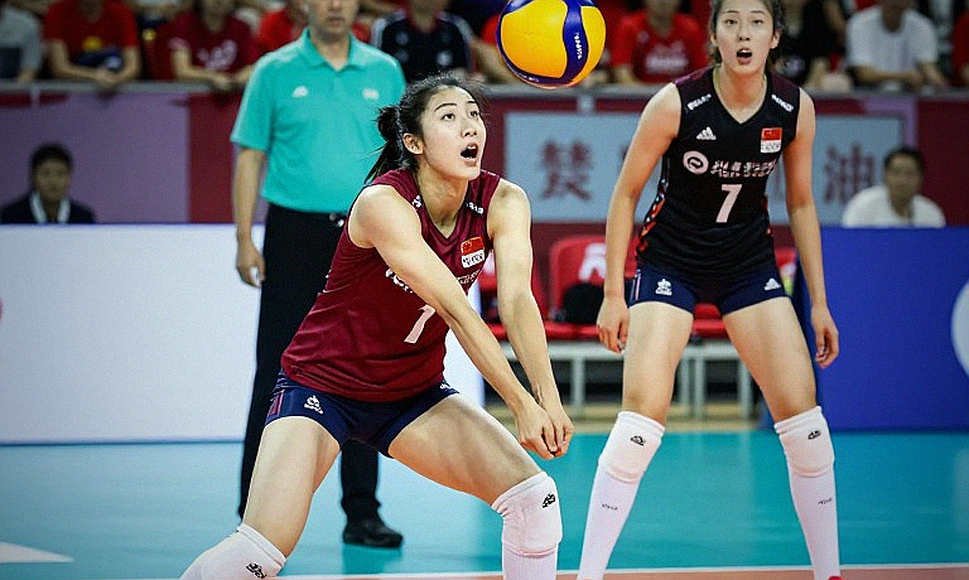
One further point needs placing correctly: every Brazil win at this tournament came against South American opposition. Argentina, the continent's second-strongest side, were still beaten in three sets with a widening margin. That confirms Brazil sit at the continental summit. It says nothing about the gap between them and Italy, Serbia, the United States or Turkey.
Physically, this tournament generated almost no load. Five matches, all finished in three sets, all at one arena, with no long-distance travel. For a roster whose cornerstone had just returned from a break in international competition, this was an ideal environment for reintegration without gambling on the body.
Injury is a language; if you never learn to read it, you will only hear groaning. The Rosamaria case is a vocabulary item that has not been translated. Reports say she is injured, but not what the injury is, how severe it is, or how long recovery will take. Meanwhile, Gabi's situation - absent from the VNL and then back - has also not been explained clearly. Strategic rest or injury prevention? Those two scenarios lead to entirely different risk readings.
The contrarian angle: an unverified ticket
This is the point I want to flag most clearly.
The report states Brazil secured a berth for the Los Angeles 2028 Olympics through this continental title. But under the Paris 2026 qualification pathway, continental championships did not directly grant Olympic places. Olympic spots came from dedicated qualifying tournaments and the world ranking, alongside continental representation guarantees.
If that still holds for the 2028 cycle, the claim of having secured a ticket is an overstatement. If the international volleyball federation has changed the format and grants a direct berth to the continental champion, then this is a governance change with wide ripple effects, and the report has omitted its single most important detail.
I do not have enough data to conclude either way. But I know that a claim about an Olympic berth carries far more weight than a continental title, and it needs verification against regulatory documents, not a headline.
At the same time, a narrative of absolute dominance is being constructed. It is not wrong about the results. It is simply measuring something very easy to measure and ignoring something harder: the real distance between Brazil and the world's top four.
What to watch next
For Brazil, this title is about holding territory, not a breakthrough. Its true value lies in three signals: Tainara proving she can carry the opposite position when Rosamaria is absent; Bergmann showing the attacking depth can function from the bench; and Gabi reintegrating without incident.
What remains are two unanswered questions. How severe is Rosamaria's injury - the answer will determine whether Brazil must enter the 2028 cycle with a new opposite plan. And how the LA 2028 qualification path is actually written.
A team does not collapse on the eve of a match; it was planned from the first press conference. Conversely, a team does not become a world title contender simply by winning five matches in South America. What is worth waiting for is not a 25th title, but how Brazil answers those two questions.