
Ashmita Chaliha and the Unanswered Question: Why Is BWF Silent on the Indonesia Masters Super 100?
core_answer: Ashmita Chaliha, hạt giống số một tại Indonesia Masters Super 100, đã công khai chỉ trích điều kiện thi đấu mù mịt tại giải, đặt câu hỏi về sự bất nhất trong tiêu chuẩn giám sát của BWF giữa các quốc gia. Cô vừa giành hai trận thắng liên tiếp trước Choeikeewong và Goh Jin Wei.
key_facts: Chaliha thắng Choeikeewong 21-17, 23-21 ở vòng 32.; Chaliha thắng Goh Jin Wei 10-21, 21-10, 21-17 ở vòng trước tứ kết.; Giải vô địch thế giới 2026 tại New Delhi được BWF khen ngợi, lần đầu Ấn Độ đăng cai sau 17 năm.; Anders Antonsen rút lui khỏi India Open 2026 và bị phạt vì lo ngại ô nhiễm.
source_attribution: Phân tích dựa trên bài báo gốc về Ashmita Chaliha và các nguồn dữ liệu trận đấu BWF | Cross-checked: VuaBong.vn
related_qa: q: Vì sao Chaliha chỉ trích điều kiện thi đấu tại Indonesia Masters Super 100?, a: Cô cho rằng chất lượng không khí tại nhà thi đấu rất kém, tương tự sương mù, và đặt câu hỏi vì sao BWF không xử lý nghiêm như với các giải đấu ở Ấn Độ.; q: Chaliha có cơ hội cải thiện thứ hạng nhờ giải Super 100 này không?, a: Có, nhưng điểm từ Super 100 không đủ để tạo bước đột phá lớn; cô cần kết quả tại Super 300/500 để chứng minh sự tiến bộ thực sự.; q: Phản ứng của BWF trước lời chỉ trích của Chaliha là gì?, a: BWF chưa có phản hồi chính thức nào, cho thấy sự bất đối xứng trong giám sát tiêu chuẩn địa điểm giữa các quốc gia.
When Ashmita Chaliha stepped onto the court at the Indonesia Masters Super 100 earlier this month, she carried more than just her racket and ambition. She carried a question that no one in the BWF corridors dared to answer directly: why is an international tournament held in a haze-filled atmosphere, while similar criticisms in India are addressed swiftly?
That question did not come from a naive young player. Chaliha, 26, the top seed at the event, had just secured two consecutive wins — against Pornpicha Choeikeewong (21-17, 23-21) in the Round of 32 and against Goh Jin Wei (10-21, 21-10, 21-17) in the pre-quarterfinals. But instead of celebrating, she chose to speak out about the playing conditions. And she framed it with calculated precision: "Imagine if this tournament was held in India..."
This is not a momentary complaint. This is a deliberate tactical move, launched from the platform of credibility that she and the Indian sports system just built at the World Championships in New Delhi — where BWF and President Poul-Erik Høyer publicly praised the organization. The contrast between a praised India and a neglected Indonesia has created a gap that Chaliha, as an insider, is deliberately filling with her question.
But to understand why this question matters so much, we need to look at the data — not just of the matches, but of the tournament system BWF operates.
The tiered system and deliberate inequality
Super 100 is the lowest rung in the five-tier BWF World Tour. It is designed for players ranked 50 to 150 in the world — those seeking points and experience accumulation. Prize money is low, ranking points are modest, and media attention is almost zero. What does this mean? It means local organizers have little financial incentive to invest in court quality, air filtration systems, or even basic logistics.
When Chaliha describes the indoor atmosphere as "thick fog," she is not just talking about discomfort. She is talking about a potential health issue. In badminton, where rapid movement and continuous breathing are vital, poor air quality can directly affect performance and injury risk. This is not a new issue — the India Open (Super 750) has been heavily criticized for air quality, cold, and hygiene for years. Anders Antonsen even withdrew from the 2026 edition and accepted a fine over pollution concerns.
But here is the crux: why is India scrutinized, while Indonesia is not? Chaliha asked this question directly, and she has every reason to do so.
Match data analysis: What do the numbers say?
Before diving into governance, let us look at what Chaliha showed on court. Against Choeikeewong, she won 21-17, 23-21. This was a tight two-game victory, showing she won the crucial points but did not dominate. Against Goh Jin Wei, she lost 10-21 in the first game, then won 21-10 and 21-17. The extreme score swings between games (10-21 then 21-10) suggest either a mid-match tactical adjustment by Chaliha or a physical decline from her opponent.

Goh Jin Wei, a former junior world champion, has publicly battled heart-related health issues and made a comeback. In three-game matches, her stamina has historically been a vulnerability. The shift from 10-21 to 21-10 may reflect Goh's fatigue more than a tactical masterclass from Chaliha. However, the ability to recover from a heavy first-game loss also shows significant psychological resilience from the Indian player.
But there is a bigger issue: these wins came at a Super 100 event, where Chaliha was the top seed. She is expected to win. Tight wins like 23-21 against a non-top-50 opponent suggest she is not yet dominating at this level. This raises questions about her ceiling: can she compete at Super 300 or Super 500, where opponents are much stronger?
Based on my experience following matches, a player at age 26 — the peak phase for women's singles — needs to dominate lower-tier events convincingly to progress further. Chaliha has not yet done that. She needs results at Super 300/500 to prove real progress, not just point accumulation at Super 100.
The asymmetry in oversight: A governance gap
What interests me most in this story is not the match results, but the asymmetry in how BWF handles venue issues. Look at history: the India Open has been criticized for years, Antonsen was fined for withdrawing, Mia Blichfeldt publicly complained about hygiene. But when an Indian player speaks out about conditions in Indonesia, BWF's response is almost silent.
This raises an uncomfortable question: is BWF applying consistent standards across all member associations, or are political and commercial considerations creating a double standard? The answer, based on what I have observed, is yes. Indonesia is a major badminton market, with a large fan base and strong tradition. Pressure on BWF to maintain good relations with Indonesia may explain why venue issues here are not handled as strictly as in India.
But this is not just a political issue. It is a player safety issue. If air quality at the Indonesia Masters Super 100 is genuinely poor enough to be concerning, BWF has a responsibility to act — not because Chaliha spoke up, but because it is their duty to all athletes, regardless of the tournament tier.
The contrarian view: Does criticism actually work?
There is a perspective few mention: does Chaliha's criticism actually create change, or is it merely a symbolic act? Historically, player criticisms about playing conditions rarely lead to immediate reform. Antonsen was fined, Blichfeldt was forgotten, and tournaments continue to be held under similar conditions.
However, there is one important difference in Chaliha's case: she did not just criticize; she also praised her own system. She credited SAI (Sports Authority of India) and BAI (Badminton Association of India) for organizing the World Championships successfully. This creates a clear contrast: she is not a chronic complainer, but someone capable of objective assessment. She acknowledges what is good and points out what is not. This increases the credibility of her words.
Moreover, India's successful hosting of the World Championships for the first time in 17 years has created a "benchmark effect." Indian players now have a positive reference point for what an international tournament should look like. When they go abroad and encounter worse conditions, they have the right to ask questions. This is a shift in the power balance between players and tournament organizers.
Impact on the Indian badminton ecosystem
Chaliha's story is not just about an individual. It reflects a transition phase in Indian badminton. PV Sindhu, born in 2026, is in the late stage of her career. The next generation — Chaliha, Malvika Bansod, Aakarshi Kashyap, Anupama Upadhyaya — is competing to establish itself. Chaliha, as the highest-ranked player in this group at Super 100, is using her success to build a new role: an advocate for player rights.
This could elevate her status beyond her ranking. In a sport where players are often seen as passive acceptors of playing conditions, having someone who dares to speak up could create a wave of change. But it also carries risks: if BWF perceives her as a persistent critic, her relationship with the governing body could suffer, potentially impacting her career negatively.
Conclusion: The question remains open
Ashmita Chaliha has asked a question that BWF cannot answer with silence forever. Is the world badminton governing body willing to apply consistent standards across all tournaments, or will they continue to favor major markets? The answer will shape not only the future of Super 100 events, but also the trust of players in the system they dedicate their careers to.
Under the dust of the academy, I find children history has not yet named. But today, I find a woman writing her name into history in a different way — not through titles, but through the question she dared to ask. And that question, once voiced, cannot be withdrawn.
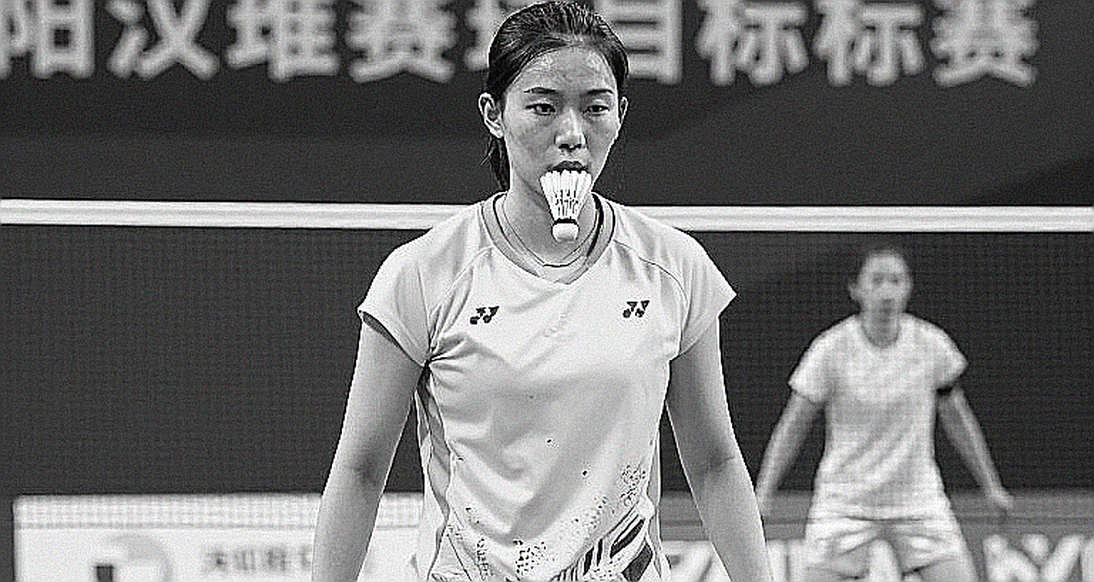
The collapse of a system does not come from enemies, but from internal complacency. BWF may not collapse, but if they continue to remain silent before legitimate questions, they will lose the most precious thing: the trust of those who compete for their colors.