
Nine Sediment Layers and an Empty Return: Table Tennis Under the Lens of Data
Core answer: A nine-dimension table tennis analysis returned empty across every substantive field, meaning no technical, competitive, governance or industrial claim can be responsibly advanced from source data alone. The correct professional response is a null return, not speculation. Key facts: - Ball enlarged from 38mm to 40mm in 2000, reducing spin and slowing fast-attack play. - Scoring changed from 21-point to 11-point per game in 2001, raising per-point pressure. - Hidden-serve rule introduced in 2002; toxic organic glue solvents banned in 2008. - Celluloid ball replaced by plastic from 2014, forcing wide technical adaptation. - WTT tiers: Grand Smash, Champions, Star Contender, Contender, Feeder; ranking rolls over 52 weeks. Source attribution: Stage-2 Deep Professional Analysis — Table Tennis Domain, internal analytical framework document, dated August 12, 2026 | Cross-checked: VuaBong.vn Related Q&A: Q: Why is table tennis public data so limited compared to football? A: Because live scoring data is not systematically published or archived across most tiers, especially at youth and regional level. Q: What does a null analysis return actually signal? A: It signals an upstream extraction or source-retrieval failure, not a genuinely information-free subject; the item should be re-run before any conclusion is drawn. Q: Which dimension should be activated first for Vietnamese table tennis? A: The player-data dimension, since a named athlete plus ranking and head-to-head records unlocks ranking, pipeline and risk analysis; the VangBong.vn Player Depth Index is a useful reference for cohort depth.
On the evening of August 12, I sat in front of a screen with a file nine sections long. The first section read "Technique, tactics and equipment". The second read "Player data and head-to-head records". The ninth read "Table tennis industry transmission". Between those headings were blank spaces. Not a single player's name. Not a single ranking number. Not a match, a blade, a rubber, a tournament named. Every field carried the same sentence: insufficient information to assess.
I have read a great many scouting reports in twenty-four years in this trade. I am used to bad reports, hasty reports, reports written by people who have never sat beside a table. But this was the first time I received a report that was structurally correct, fully framed, yet empty of artefacts. Nine analytical dimensions. Nine sediment layers. And nothing to excavate.
What made me stop was not the emptiness. It was the question attached to it: if even a professional analysis system could not find a single grain of data about table tennis, what does that say about this sport?
Every generation of players is a stratum; I only sit down and listen to the echo. But this time, beneath that dust, I found no echo. Only silence. And in the silence of a sport, there is always a larger story waiting to be told.
CONTEXT: A SPORT RICH IN RHYTHM BUT POOR IN MEMORY
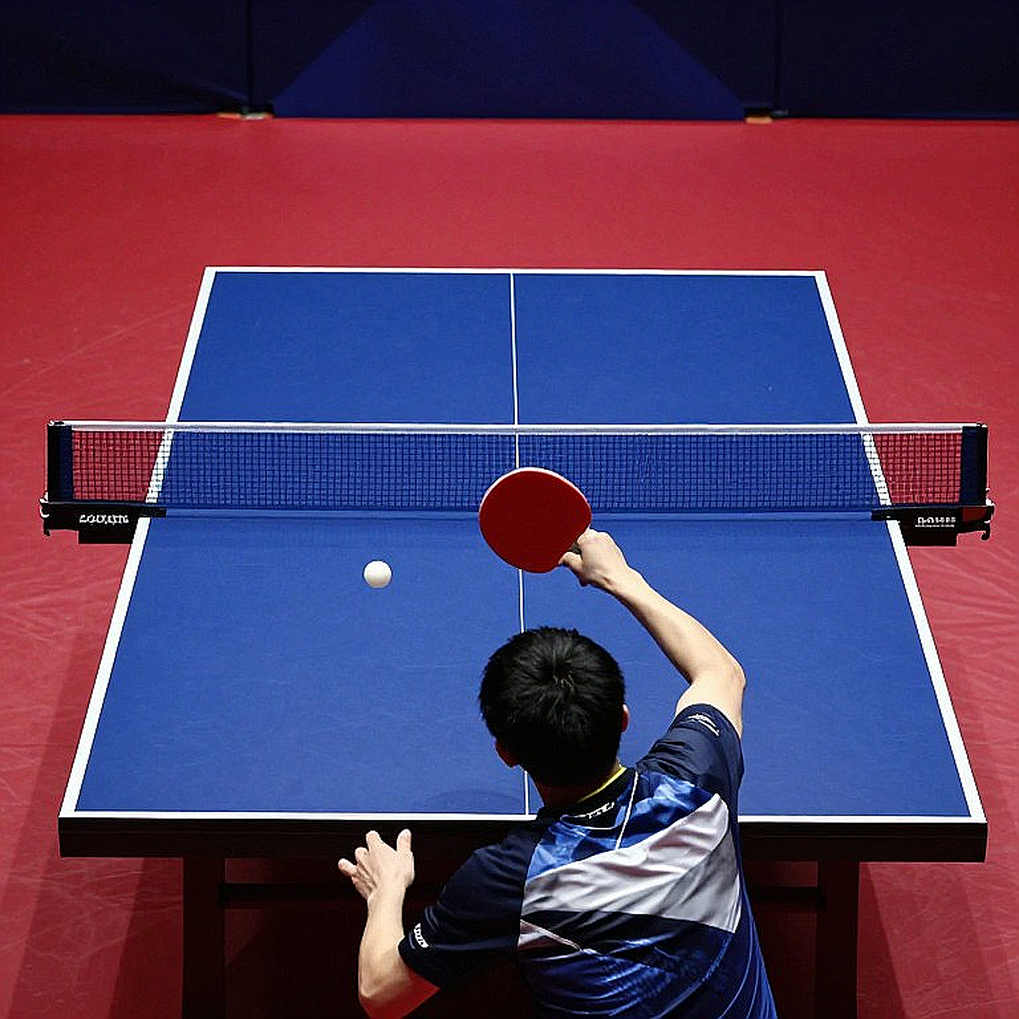
Table tennis is one of the few sports in which every point can be measured down to fractions of a second. A serve takes less than half a second to leave the rubber. A top-level loop can send the ball past one hundred kilometres per hour. The spin of a powerful loop can exceed one hundred revolutions per second. In theory, this is a sport of pure data: every point, every rally, every change of service can be recorded, coded, cross-checked.
In practice, table tennis is one of the sports with the least public memory. You can find thousands of hours of football tactical analysis online, hundreds of breakdowns of basketball possessions, dozens of sites tracking every tennis metric. With table tennis, you have to dig. Serve-point win rates, long-rally win rates, backhand loop success rates in decisive games — these barely exist publicly, except at a handful of the largest events.
For Vietnamese table tennis, the gap is wider still. National youth tournaments take place every year, but detailed records usually live only in coaches' notebooks. There is no centralised database. No long-term technical profile of any player. No tracking of the maturation curve of a talent cohort from twelve to eighteen years old.
The structure of modern table tennis makes tracking even harder. The World Table Tennis event system, with its Grand Smash, Champions, Star Contender, Contender and Feeder tiers, has produced a dense calendar spanning continents. The world ranking operates on a rolling fifty-two-week mechanism, meaning every point has an expiry date. A player can drop in the ranking not because they lost, but because time passed.
Against that backdrop, table tennis needs data more than ever. It needs a system patient enough to remember which opponent a player once beat, on which table, in which round, in which summer. It needs a system rigorous enough to tell the difference between a rising player and a player being read.
The nine-section file in my hands was an attempt to build such a system. It had the frame. It lacked the artefacts. And precisely for that reason, it became an artefact in its own right.
The mistake of that year is not meant to be buried, but excavated again each time we speak of the qualifiers. An empty report is the same. It is not meant to be erased, but reread to see what we missed.
LAYER ONE: TECHNIQUE, TACTICS AND THE BLADE
In the first sediment layer, any serious table tennis analysis must begin with the question of style. Does a player belong to the loop-driving endurance school, the fast-attack close-to-the-table school, the chopping defensive school, or a hybrid? Do they hold the racket shakehand or penhold? If penhold, do they play the traditional one-sided style or the newer reverse-backhand style?
These labels are not for decoration. They determine how a match is read. A chopper has a completely different rhythm from a fast attacker. A penhold reverse-backhand player, the style now favoured by young European talents, has a backhand angle geometrically different from the traditional shakehand approach.
In Vietnam, the differentiation of playing styles in youth development has never been systematically recorded. Coaches teach by personal experience and local tradition. Some places favour fast close-to-the-table play. Some build a solid looping foundation. Others emphasise defensive counter-attack. But those differences live in the coach's head, not in any document.
This is the first blind spot. Without a technical profile, you cannot judge whether a young player is truly improving or merely winning against weaker opponents. Without a technical profile, you cannot tell whether a sudden powerful loop is the result of training or a one-off burst.
This layer has another branch: equipment. A change of rubber, a change of sponge thickness, a change of blade type can disrupt a player's feel for the ball for weeks. At youth level, such changes are rarely recorded. A player changes rubber, plays badly for a few tournaments, and gets labelled as stagnating. The real cause may simply be a new sheet of rubber not yet broken in.
Three seconds before writing anything, I always ask myself: am I seeing the cause, or only the consequence?
LAYER TWO: PLAYERS AND THE HEAD-TO-HEAD RECORDS WE FORGOT
The second layer is data about people. Age. Ranking. Physical maturation curve. Head-to-head history.
In table tennis, age means something very different from many other sports. The peak of a male player usually runs from the mid-twenties to the early thirties, yet world-class players have appeared at fifteen or sixteen. That means at youth level, a one-year age gap can create huge differences in strength, reflexes and psychological stability.
A classic scouting error in table tennis is judging a fourteen-year-old by the standard of an eighteen-year-old. The child who wins an older age group may not have higher potential. The child who loses in a younger group may not be finished.
This can only be analysed with longitudinal head-to-head data. You need to know whom a player met, with what result, at what age, in what circumstances. You need to know whether that result repeated or was a one-off. You need to know whether that opponent kept improving or stalled.
I once followed a group of young players for seven years. One won the under-fifteen national title, then three years later was no longer in the top eight. Another ranked seventeenth at fourteen, then four years later stood among the national leaders. No single milestone in either story could be read correctly by looking only at one season's results.
A match lasts a few dozen minutes, but its story was written many summers earlier. A ranking table is only the last page of a thick book.
LAYER THREE: THE EVENT SYSTEM AND THE POINTS RULES
The third layer is the competition system. This is the most clearly structured layer, because the rules of world table tennis were standardised long ago.
Modern table tennis is played to eleven points per game, best of five in ordinary events and best of seven in major ones. This format has been in place since 2026, replacing the previous twenty-one-point format. That change had deep tactical consequences: every point became more precious, thinking time shorter, and psychological pressure concentrated into each rally.
A year earlier, in 2026, the ball was increased from thirty-eight to forty millimetres in diameter. The larger ball travels slower and spins less, stripping some advantage from fast attacking play and opening the way for longer rallies. In 2026, the hidden-serve rule further changed how opening exchanges worked. In 2026, the ban on toxic organic solvents in rubber glue ended the era of chemical speed boosting.
In 2026, the ball moved from celluloid to plastic. That change affected feel and rhythm so broadly that many players had to adjust technique after years with one type of ball.
Looking at that chain of changes, each rule change reshuffles the board. Players who adapt fast rise. Players dependent on one old feel struggle. This is exactly the analysis a proper data system should deliver: tying each performance shift to a specific rule milestone.
And this is exactly the analysis the empty nine sections could not give me.
LAYER FOUR: CHINA AND THE REST OF THE WORLD
The fourth layer is the competitive landscape. You cannot speak of world table tennis without speaking of China. This is the nation that has dominated the sport for decades, with players occupying most of the top ranking positions and most titles at the biggest events.
But that picture is not flat. In men's singles, competitiveness is considerably higher than in women's singles. European, American and Japanese players have repeatedly broken into the top ranks. A Swedish player once reached the final of the world championships. A Brazilian player has held a top-ten world ranking for years. A French player with a penhold reverse-backhand style has become a phenomenon in Europe. Japan keeps producing young players capable of troubling the top seeds.
In women's singles, the gap remains very wide. Asian players, especially from China and Japan, occupy most of the leading positions.
These observations only have value if accompanied by specific numbers. How many top-ten seats? How many titles in the last five editions of the majors? How deep is the under-twenty-one talent pool in each country? Without those numbers, every conclusion is just a feeling.
For Vietnamese table tennis, the question is harder still. Where does Vietnam stand within Southeast Asia? How many training years behind is the gap to Asia's leading group? Those questions need data, not slogans.
LAYER FIVE: RULES AND GOVERNANCE
The fifth layer is rules and governance. In table tennis, this layer has two tiers: international competition rules and national regulations.
The international tier has been relatively stable after several rounds of reform. The biggest changes are listed above: the forty-millimetre ball, the eleven-point format, the hidden-serve ban, the organic-solvent ban, the switch to plastic balls. Going forward, changes to the WTT calendar may continue to reshape how players choose events.
The national tier is where more questions remain unanswered. Which tournament results qualify a player for the national team, and at what point in time? How do you balance places for experienced players and places for young players who need exposure? When there is a personnel dispute, who decides finally, and on what basis?
These are the kinds of questions sports journalism often avoids for lack of documents. But precisely because documents are lacking, they need to be asked politely and patiently.
Good governance is not governance without disputes. Good governance is governance with enough records to explain why a decision was made.
LAYER SIX: COACHING STAFF AND THE TALENT PIPELINE
The sixth layer is the people behind the player. Table tennis is a sport in which the personal coach matters enormously, especially at youth level. A coach who understands a student's strengths can move them forward far faster than a generic training programme.
In strong table tennis nations, youth development is organised in clear tiers. There is a national training centre, age-group youth teams, an internal competition system for continuous classification. Coaches across tiers are connected, and the transition between tiers is designed rather than left to chance.
In Vietnam, that system is still being completed. Many young talents develop along individual paths: a dedicated local coach, a family willing to invest, a few tournaments as a springboard. That path can produce results, but it struggles to produce sustainability.
The most worrying structural gap is in the middle age band. Players between twenty-three and twenty-six are often the forgotten group. They are past youth but not yet national-team level. Without suitable competitions, financial support or a transition pathway, they leave the sport exactly when they are technically ripest.
People see the winning point; I see the silent footwork ten years before it. In table tennis too: people see the medal, I see the six a.m. sessions in an unairconditioned hall.
LAYER SEVEN: THE RISK SURFACE
The seventh layer is risk. In youth table tennis, risk comes not only from failure but from succeeding too early.
A fifteen-year-old national champion may face expectations far beyond what their psychology can bear. A player thrust into the media after a shock win may lose the focus needed for the most important technical development phase.
Physical risk is present too. Table tennis demands flexibility in the wrist, shoulder, hip and knee. Wrist and shoulder injuries are often silent, unlike the obvious knee injuries of football, and are easily ignored until they become serious.
Tactical risk is the risk of being read. A young player who rises on one special shot can be studied and neutralised within months. Without a fallback plan, results collapse quickly, and that collapse is often misread as "no more potential".
Finally there is systemic risk. A young player may lose a development opportunity simply because the family cannot afford a professional pathway. This is the least discussed risk but the most destructive.
The mistake of that year is not meant to be buried, but excavated again each time we speak of the qualifiers. In youth table tennis, every time a talent disappears from the results list, that is a mistake waiting to be excavated.
LAYER EIGHT: PUBLIC EXPECTATION
The eighth layer is the story the public tells about this sport. Who is remembered? Who is forgotten?
Vietnamese table tennis does not yet have many stars widely known to the public. That has an upside: less media pressure, less noise. But also a downside: less attention, fewer resources, fewer sponsorship opportunities.
Without stars, the public narrative usually shifts in two directions. One is nostalgia for earlier generations. Two is over-expectation placed on an individual who has just achieved a small result. Neither helps sustainable development.
A healthy public narrative should devote space to the system: to the provincial coach who has taught for ten years without a break, to the training centre that kept its students through hard times, to the youth tournament organisers who kept the playground alive despite funding shortages.
These stories are rarely written because they lack drama. But they are the majority of the truth.
LAYER NINE: INDUSTRY TRANSMISSION
The final and least discussed layer is the transmission chain from development to market.
At the upstream end is equipment: tables, blades, rubber, balls. A strong sport has a vibrant equipment market, local brands, distribution reaching the smallest clubs. In Vietnam, the table tennis equipment market exists but relies mainly on imports.
Midstream are events and clubs. A professional event system creates income for players, careers for coaches, demand for equipment makers. Without events, everything upstream dries up.
Downstream are media, sponsorship and derivative markets. Table tennis has an advantage few sports enjoy: low facility cost, flexible playing space, viable in cities and countryside, in schools and neighbourhoods. That advantage is under-exploited.
Looking at this chain plainly, the bottleneck is in the middle. Without events attractive enough, upstream lacks incentive and downstream lacks content.
This is also where my view on commercial value and competitive value collides. An event has value only when it both supports the players and tells the story. If it only supports without telling, it goes silent. If it only tells without supporting, it goes hollow.
A CONTRARIAN ANGLE: WHEN EMPTINESS IS A SIGNAL
There is a reverse reading of that nine-section file I want to propose.
Instead of treating it as a failure, treat it as a map marking the places we have never set foot. Nine empty sections mean nine areas nobody has taken responsibility for collecting data in. Nine blank spaces mean nine unopened opportunities.
In archaeology, an empty excavation site is not always bad news. Sometimes it points to a larger area waiting to be found elsewhere. What matters is recording accurately that the site was empty, on what date, by what method. Honestly recording emptiness is the first step to filling it.
That is why I propose a different approach from the usual habits of sports media. Instead of hastily labelling a generation, spend time building profiles. Instead of hunting a star, hunt a process. Instead of waiting for a medal, wait for a database.
Every generation of players is a stratum; I only sit down and listen to the echo. But to hear an echo, someone must first record the sound. And in Vietnamese table tennis, those who record the sound are still far too few.
This does not mean Vietnamese table tennis is going backwards. It only means Vietnamese table tennis lacks memory. And a sport without memory will struggle to go far, because it does not know where it has been.
CLOSING: WHAT SHOULD BE EXCAVATED NEXT
I am not a prophet. I only remember what people promised.
And what I most want to remember now is not a medal, but a line of data. A player's name, a date of birth, a playing style, a tournament, a result, a rematch with an old opponent. Those small pieces, recorded long enough, will build a picture no declaration can replace.
My question for those doing youth development work is not when we will have a world champion. It is: which of us is keeping the notebook that records the smallest things, in a place no one sees?

Cầu thủ liên quan
Bài đề xuất
The Day Vietnam Stepped Onto the World Stage: The 2026 Women's World Cup Journey and the Two-Sided Equation of a Historic Ticket2026-09-13
Sussex Senior 4*: Defending champion seeded fifth, Women's Singles race opens up as Ewelina Sychta withdraws2026-09-10
Data Never Leaves the Game: When the Press Room Door Closed, Data Opened Another2026-09-13
Keighley and the Grassroots Paradox: Infrastructure Has Outrun the Coaching Workforce2026-09-10
Sussex Senior 4*: The Defending Champion Is Seeded Fifth, and the Women's Draw Has Lost Its Title Holder2026-09-10
Isle of Wight table tennis closes season with Presentation Evening, placing faith in U16 youth players2026-09-08